
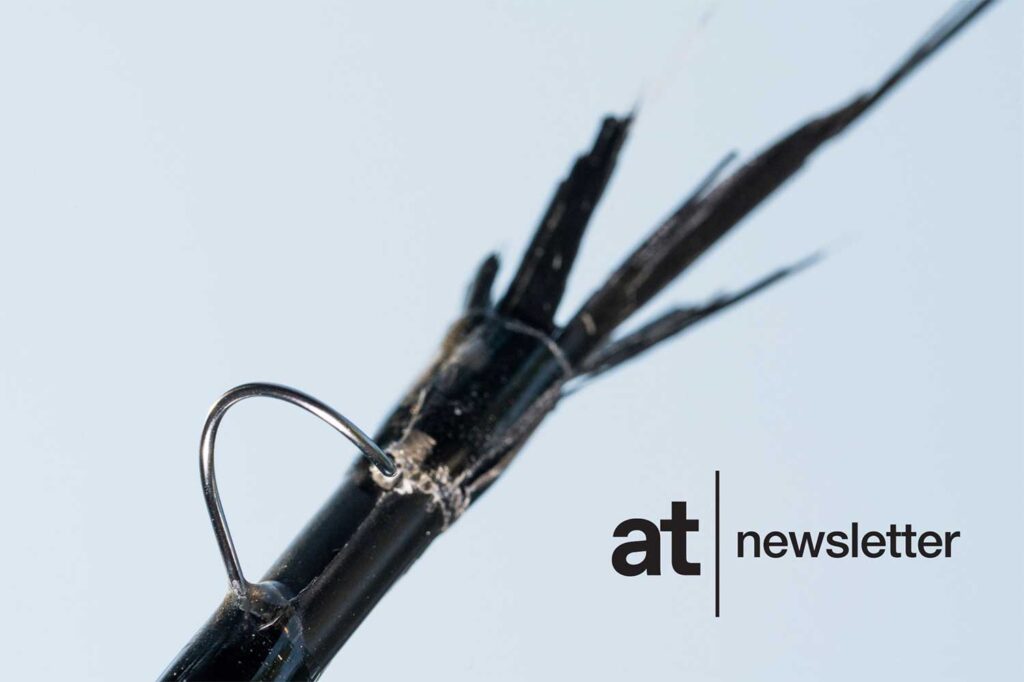
I once planned to lay several fly rods on a table, so I could take a hammer and break them all at once. Then I was going to send them off for warranty repair and judge the different companies for how long they took to fix the repairs, the quality of the work, costs of services and so forth.
Even though that would’ve been world-class (media) clickbait, I just couldn’t bring myself to breaking the rods. I might have sooner taken a ball-peen hammer to my own toes, but that didn’t seem like a very good idea either.
Letting nature take its course instead, over a few years I managed to break a handful of rods the old-fashioned way (by being an idiot). So, I sent them off and what I learned was that one cannot fairly compare rod companies on warranty service, because they’re all different. It’s an apple-oranges deal. Some have made their manufacturing processes so uniform that they can replace one broken tip section with another off the shelf (Orvis, Epic Fly Rods). Others (Sage) will rebuild the broken part specifically to match your rod.
You can decide for yourself how much the “custom” factor appeals to you, but when I sent off four rods, they all came back in basically the same order I anticipated. Orvis was fastest (within a week), Winston slowest (about six months), Sage and Scott were in between at a couple months each. Which is pretty much what all these companies say they do, if you read the fine print when you buy the rods/warranty in the first place.
I didn’t test other rod companies because, fortunately, I’m not that fantastically uncoordinated that I can break rods by brand, but I am sure that will happen over time. I’ll keep you posted.
I also found it interesting that some companies still try to decipher the degrees of carelessness that led to the rod breaking in the first place. Sage says its “fly rods come with a lifetime warranty for the original owner, covering defects in materials and workmanship. This warranty applies to the rod, blank. However, it does not cover damages from misuse, neglect, normal wear and tear, fire, theft, or intentional breakage. A repair or replacement is at Sage’s discretion.”
I mean, I get it if the reel seat falls off when you take it out of the tube for the first time (which has never happened to me), but pulling on a 100-pound tarpon with a 7-weight kinda pushes the boundaries of common sense. And who’s recording the play-by-play to make that judgment call?
What’s the point of warranties if they’re not no-fault warranties? In many cases, what we’re really talking about is a tiered menu of repair prices. In others, it truly is “no-fault.” Your dog ate it, we fix it. You break it in a screen door, we fix it. You smash it with a hammer…we fix it.
I still contend that consumers are already pre-paying for most of those fixes. Figure one in three rods gets broken, so build a third extra into the price tag up front. Whether that’s been a boon or bust for the average fly shop over the past 30 years or so has been a topic of hot debate for, well, 30 years or so.
The days of taking your broken rod to the fly shop and they send it in for you, and a couple weeks later you get your fixed rod back–at no cost (yes, believe it or not, this is how it happened, back in the day)–have gone the way of the dodo. You can easily drop a couple hundy getting your warrantied rod fixed by some companies.
Which leads us to the real question of the day–are rod warranties even worth it anymore? The companies that kick everyone else’s asses when it comes to warranties don’t like me asking that. And neither do the companies that, truth be told, consider warranties an albatross.
So things stay the same.
But I’d sure be curious about what kind of reaction consumers would have if they were given the option of buying warranty coverage or not at the time of purchase, like you get when you buy a stereo at Best Buy. Would you spend $1200 for the fly rod all-in with warranty, or, say $800, knowing you save up front, but will eat the cost if you do something stupid and break it?
I can tell you with certainty that anglers would be a lot more careful with fly rods minus the automatic warranty.
For damn sure, no jackass would be dumb enough to even think about smashing them with a hammer.
– Kirk Deeter



4 Comments
We’ve been living in a post-warranty world for the last 15 or so years.
I think there’s a fundamental misunderstanding of the costs associated with repairs. The contention that there’s a built in warranty cost in a modern rod is inaccurate.
Take a typical non-Sage warranty repair fee for example – somewhere between $75 and $100 depending on the brand and model. Figure domestic return shipping these days is going to be around $25 for return ground shipping and packing materials, leaving $50-$75 for the company to spend on the repair itself. With somewhere around 80% of breakages being the tip, this covers slightly more than the cost. If you break multiple or all sections, they lose money.
The NON-warranty cost of most repairs is very much profitable and price anchors perception to make one assume that a tip is “worth” $150 or more, which is just not accurate.
On a part basis, there just isn’t a meaningful difference in cost between an entry level domestic rod and a high end domestic rod on a non-butt section. If a company can sell a US made rod at $250 wholesale *and* make money, you can intuit that a tip only carries $20-$50 in finished cost.
As I said at the beginning, we’re already in a post-warranty world. Repair fees you pay are effectively covering the repair to be completed at slightly over cost. How would manufacturers price rods if they weren’t offering a “warranty”? Well, the retail prices wouldn’t budge, and certainly not go down from $1,200 to $800. They would move to a fee system like Sage. That system pushes anglers to abandon having older rods repaired due to increased fees and motivates them to buy new rods.
Why can’t the Customer decide what level of warranty he wants and pay accordingly, just like major appliances at Best Buy or wherever?
What can’t the Fly Shop sell these warranties, don’t we deserve some level of extra service to offer our customers?
Wouldn’t this be a better system for the Rod Companies? No more warranties to deal with after 60 or 90 days? Let’s face it most manufacturing defects will occur in the first 90 days if they’re going to anyway.
I’ve been fly fishing since the 197Os.
As I recall, the no fault warranty really bloomed when Sage tried to match Orvis’s warranty.
When Sage did this, they immediately raised the price of their rods to account for future expenses.
Basically, this is what insurance companies do. They take the the premiums and create a sinking fund which they use to invest in US treasury bonds to grow the fund for inflation costs.
This forced other tackle manufacturers to follow suit.
But greed took over. Rather than invest the extra money, they took it as profits ;and by doing so. they created a huge future indebtedness that they would eventually have to cover.
They bet the company and lost so Sage and other rod companies like it were sold off and the new owners no longer honor the warranties the customers paid for. Greed is what killed Sage and companies like it.
Great read. Thank you. It’s important to consider warranty when purchasing a fly rod. TFO has been one of the best, fastest rod return and low cost of shipping($35) – for years . Building brand loyalty and keeping it is difficult in our click/buy society. Tight lines.